Why the Root Zone Comes First
Roots supply water, nutrients and anchorage, and they need oxygen to do it. When soil is too wet, too dry, too compacted or chemically unsuitable, roots fail quietly long before the leaves complain. Many symptoms people treat as diseases or deficiencies begin with roots that simply cannot work.
The checks below need nothing more than a trowel, a spade, a jar and some water. Run them before buying fertiliser, soil improvers or treatments.
Texture: What Your Soil Is Made Of
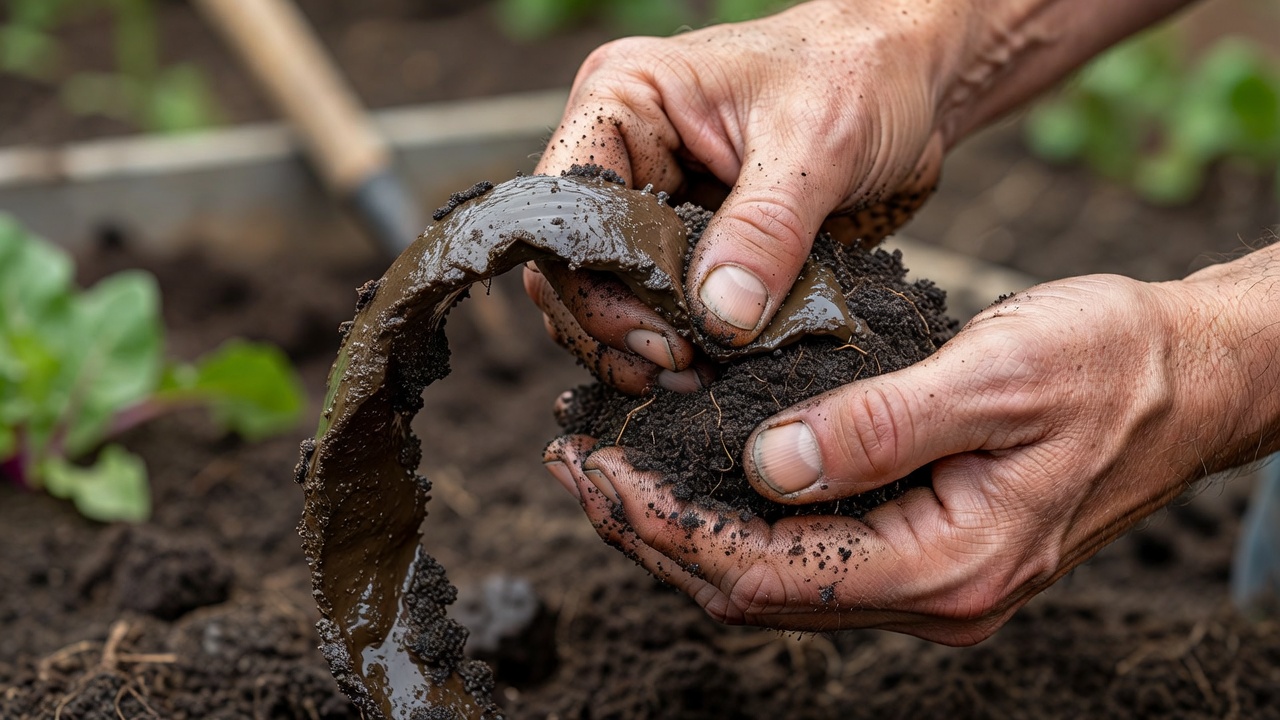
Mineral soil is a mix of sand, silt and clay particles. The USDA soil texture triangle classifies soils by their proportions, from sand through loam to clay. You can estimate yours by hand: take a walnut-sized lump of moist soil and rub it between your fingers.
- Gritty and unable to hold a shape suggests sandy soil, which drains fast and holds few nutrients.
- Silky or soapy suggests silt, fertile but prone to surface crusting.
- Sticky, forming a long ribbon when squeezed between thumb and finger, suggests clay: nutrient-rich, slow-draining and easily compacted when worked wet.
For a clearer picture, try a jar test. Half-fill a straight-sided jar with soil, top up with water and a pinch of washing-up liquid, shake well and leave it. Sand settles within a minute, silt over a few hours, and clay can take a day or more. The layer depths give a rough proportion.
Drainage and Compaction
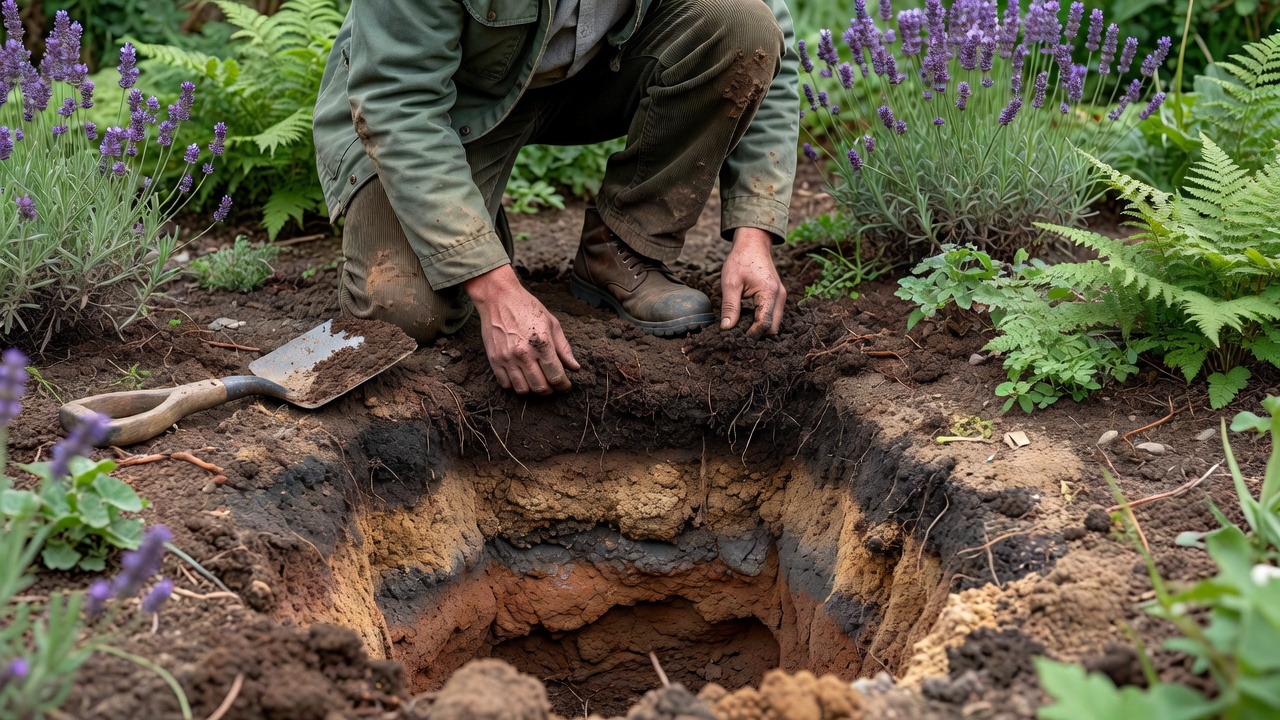
A simple percolation test reveals whether water moves through your soil. Dig a hole about 30 centimetres deep and wide, fill it with water and let it drain. Fill it again and note how long it takes to empty. If water remains after several hours, drainage is poor for most garden plants; if it vanishes within minutes, the site may be droughty.
Compaction often hides beneath lawns, new-build gardens and paths where machinery or foot traffic has pressed the soil. Push a garden fork or a thin metal rod into the ground. If it suddenly resists at a consistent depth, there may be a compacted layer roots cannot easily cross. Roots that grow sideways in a flat mat at that depth confirm it.
pH and Nutrients
Soil pH controls how available nutrients are. Most garden plants grow well between about pH 6.0 and 7.0, but acid-loving plants such as rhododendrons, camellias and blueberries struggle in alkaline soil, often showing yellowing between the veins of new leaves. Inexpensive pH kits give a useful indication. For nutrient levels, a laboratory test is far more reliable than guesswork; Cooperative Extension services in the US and commercial laboratories in the UK offer soil analysis with interpretation.
A soil test tells you what is in the ground. It does not tell you whether the roots can reach it. Drainage and structure decide that.Reasoning caution
Comparison Rows: Root Zone Observations
| Observation | Possible causes to investigate | Supporting check |
|---|---|---|
| Roots brown, soft, outer layer slips off | Root rot from waterlogging or a soil-borne pathogen | Percolation test; sour smell; recent heavy rain or overwatering |
| Roots circling the inside of a pot | Root-bound plant unable to explore new soil | Time since potting; water running straight through |
| Grey, bluish or mottled soil with a sour smell | Waterlogged, low-oxygen conditions | Water level in a test hole after rain |
| Dry, dusty soil under mulch or near hedges | Competition from tree and hedge roots; rain shadow | Moisture at 15 cm after rain; nearby walls or canopies |
| Few earthworms, crusted surface | Low organic matter, compaction | Count worms in a spadeful of soil in moist weather |
Soil Life
Charles Darwin devoted his final book, The Formation of Vegetable Mould through the Action of Worms (1881), to earthworms and their role in turning and aerating soil. Modern writers such as Jeff Lowenfels and Wayne Lewis, in Teaming with Microbes, describe the wider web of fungi and bacteria around roots. In practice, regular additions of organic matter as a surface mulch, minimal digging and avoiding work on wet soil all support that life.
Next Checks
Inspect the roots of a container plant
Water the pot an hour before, tip it on its side and slide the root ball out. Healthy roots are usually pale and firm; dark, mushy roots or missing fine roots suggest a problem worth investigating.
Repeat the drainage test after rain
A seasonally high water table can make a site wet only in winter. Testing in two seasons gives a fairer picture.
Compare pH across beds
Soil near walls, foundations and old rubble can be more alkaline than open beds. Test separately where plants behave differently.